Cape Town, South Africa
Mother City of Africa, and the Western Cape, Cape Town is an area which is regarded as one of the most beautiful regions in the world. The city is a rare cultural gem, resulting from the amalgamation of Indonesian, French, Dutch, British, and German settlers, the local Bushman and Hottento tribes, and the Bantu tribes from the north.
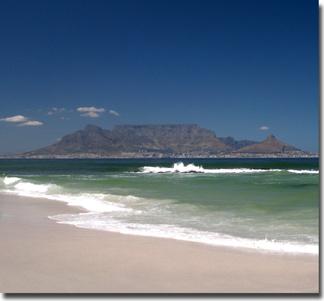
The impressive presence of Table Mountain, flanked by the legendary Devil's Peak and historical Signal Hill, stands proudly above the city. Beautiful white sandy beaches along a peaceful coastline frame the Cape Peninsula, which is famed for its unique floral kingdom, bountiful rivers, vleis, dams and magnificent countryside. The surrounding area extends far into the winelands, green in summer and red-gold in autumn.
Cape Town boasts a multitude of entertainment, ranging from outdoor activities and adventures in the sun to a roaring night life under neon signs. The vast array of shopping opportunities include haggling with shopholders at Greenmarket Square Flea Market, as well as breezing through sophisticated and stylish shopping malls. The huge variety of restaurants reflects the multicultured history of the Cape and caters to everyone's taste, from fast-food outlets and casual to the chic and very elegant.
Cape Town is a city of culture, built on a history that is reflected in the architecture, cuisine, music, and dance. A warm summer and temperate winter climate along with a friendly community makes the Western Cape and the Mother City an ideal study abroad destination throughout the year.
University Information
The University of Cape Town is South Africa's oldest university, and is one of Africa's leading teaching and research institutions.
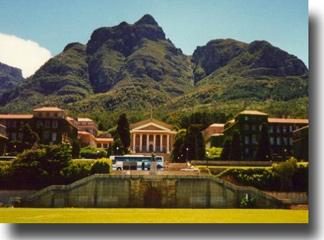 The University of Cape Town was founded in 1829 as the South African College, a high school for boys. The College had a small tertiary-education facility that grew substantially after 1880, when the discovery of gold and diamonds in the north - and the resulting demand for skills in mining - gave it the financial boost it needed to grow.
"Moscow on the Hill"
Apart from establishing itself as a leading research and teaching university, UCT earned itself the nickname "Moscow on the Hill" during the period from 1960 to 1990 for its sustained opposition to apartheid, particularly in higher education.
Areas of Study
The university has six faculties - Commerce, Engineering & the Built Environment, Law, Health Sciences, Humanities and Science - which are supported by UCT's Centre for Higher Education Development, which addresses students' teaching and learning needs.
UCT continues to work towards its goal to be Africa's leading research university.

